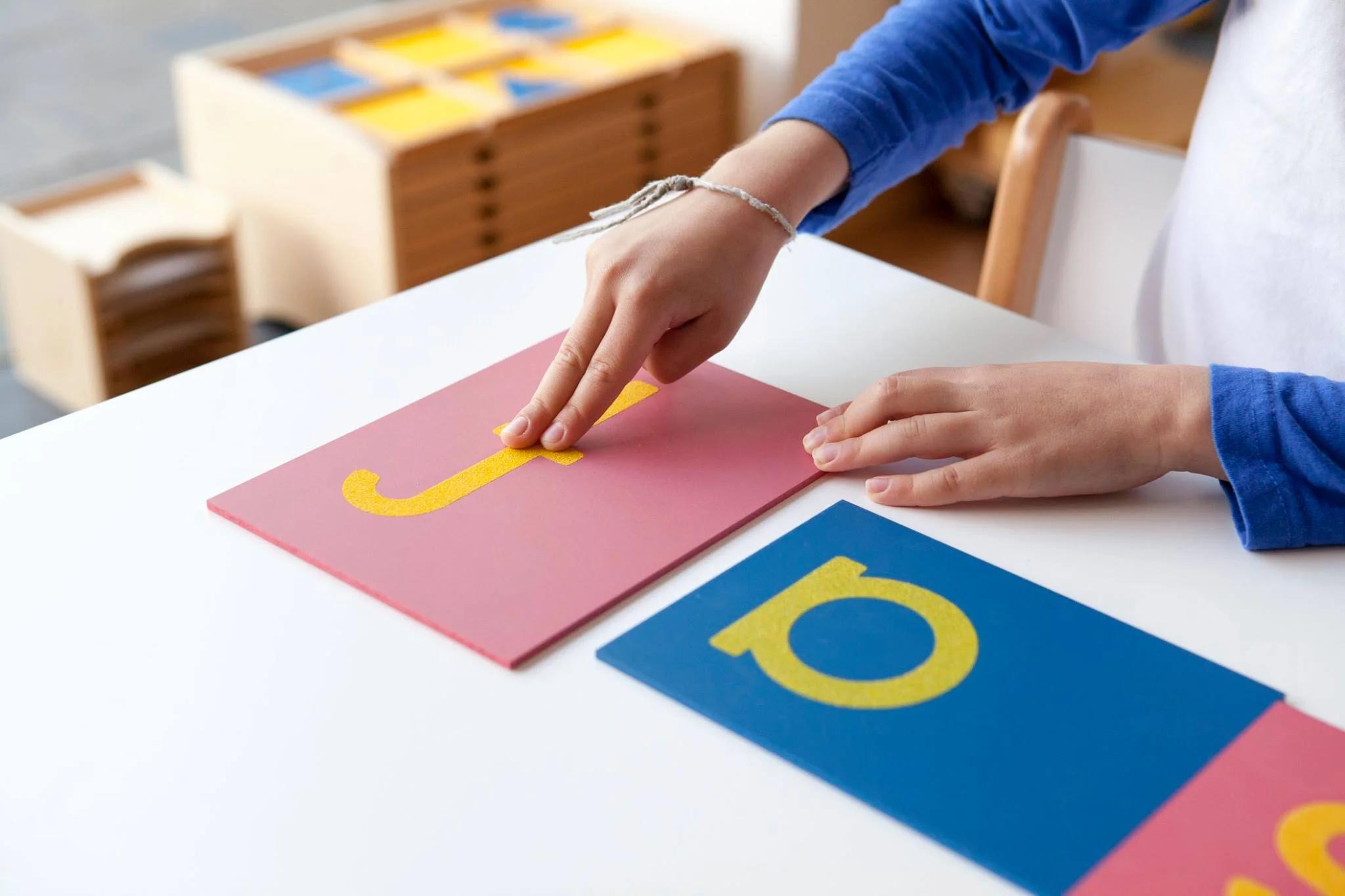
Sandpaper Letters
Children trace textured letters while saying their sounds, connecting movement, touch, sight, and hearing to build strong letter-sound associations.
 Together We Grow

Montessori Curriculum
Montessori language education nurtures children's natural desire to communicate. Through rich conversations, phonics, storytelling, writing, and hands-on materials, children develop confidence in speaking, reading, writing, and expressing their ideas.
Language Development
Montessori language development supports children's natural ability and desire to communicate. From the earliest years, children are surrounded by rich language, meaningful conversations, stories, songs, vocabulary, and opportunities to express their ideas.
In a Montessori classroom, language is not taught only through worksheets or drills. Children build language through hands-on materials, real conversations, movement, listening, storytelling, sound games, phonics, writing preparation, and early reading experiences.
Montessori recognizes that speaking, listening, reading, and writing are deeply connected. Children first develop oral language and vocabulary, then gradually move toward sound awareness, letter recognition, writing, and reading.
At Together We Grow Montessori School, language development is woven into daily classroom life, helping children build confidence in communication, literacy, and self-expression.
Natural Language Growth
In Montessori education, language grows naturally through meaningful daily experiences. Children are encouraged to speak, listen, ask questions, describe their work, share ideas, and participate in respectful conversations with teachers and classmates.
Rich oral language is the foundation for later reading and writing. When children hear precise vocabulary, listen to stories, sing songs, classify objects, and talk about the world around them, they expand their understanding of language in a natural and joyful way.
Montessori teachers also introduce sound games that help children notice the sounds within words. These early phonemic awareness activities prepare children for phonics, letter-sound relationships, reading, and writing.
Montessori Language Materials
Montessori language materials are introduced gradually as children become ready. Each material isolates a specific skill, allowing children to build confidence through exploration, repetition, and discovery rather than memorization.
Children trace textured letters while saying their sounds, connecting movement, touch, sight, and hearing to build strong letter-sound associations.
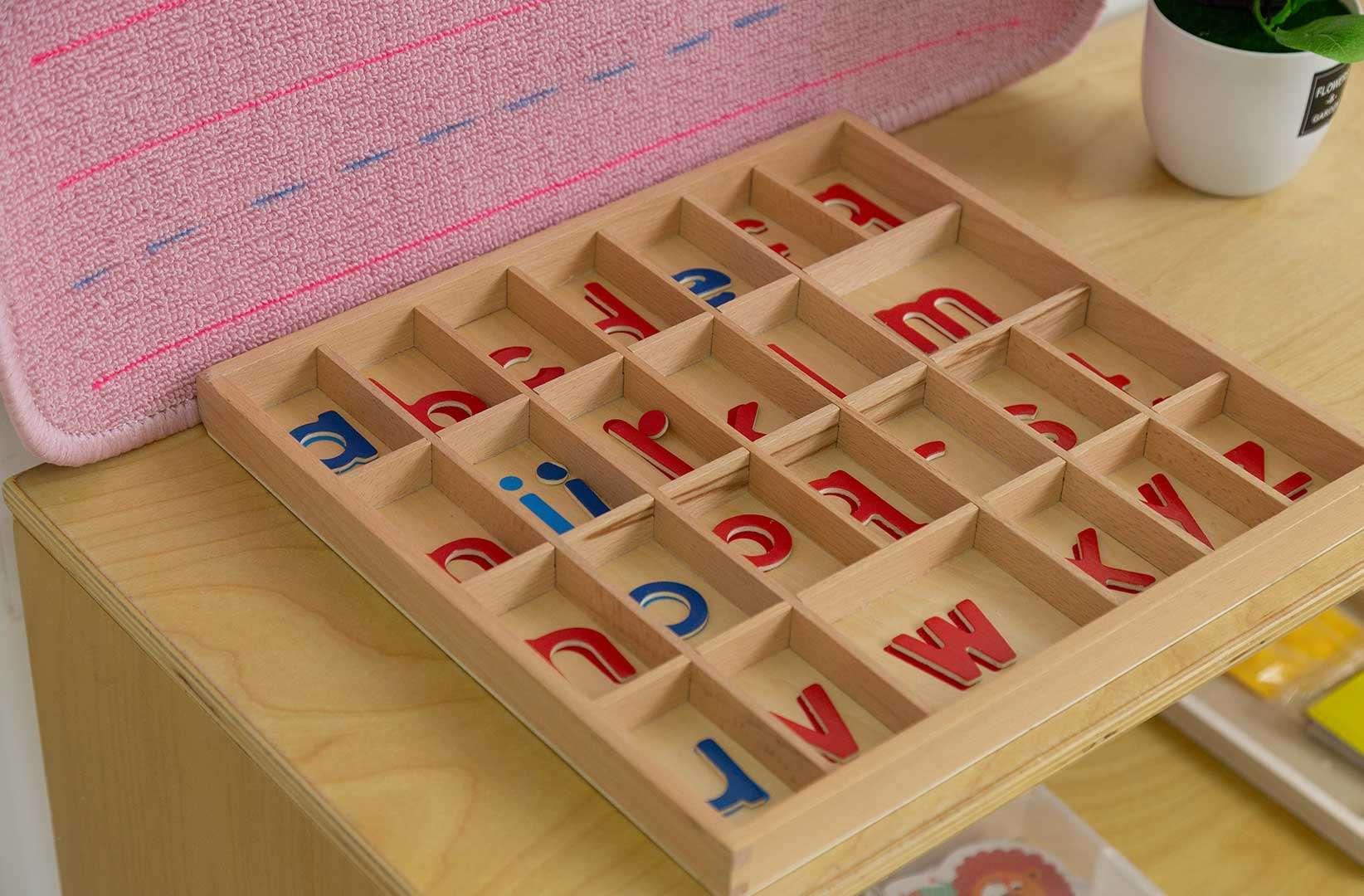
Before writing with a pencil, children use wooden letters to build words and sentences, allowing them to express ideas independently.
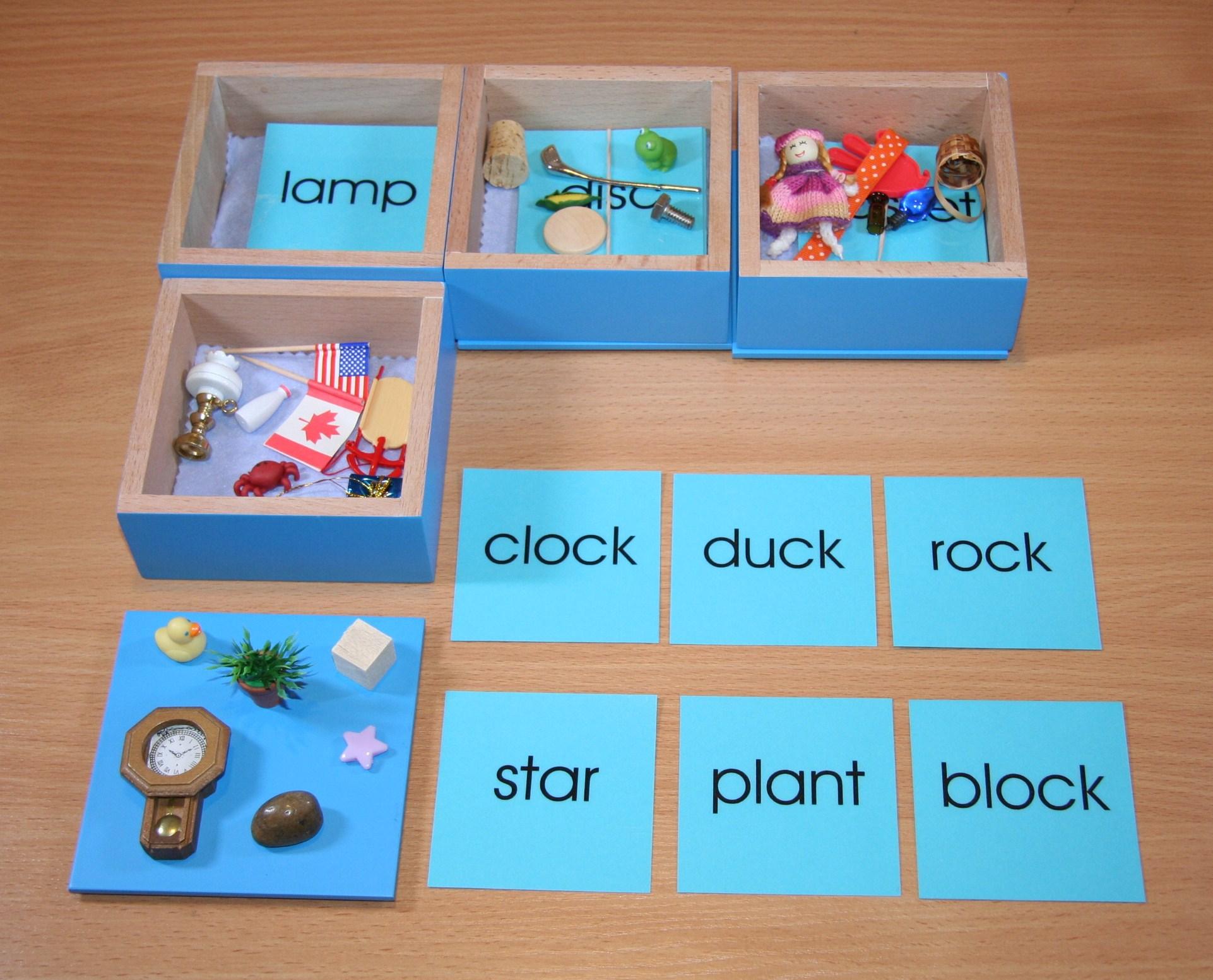
Children match miniature objects with beginning sounds and vocabulary, strengthening phonemic awareness and oral language development.
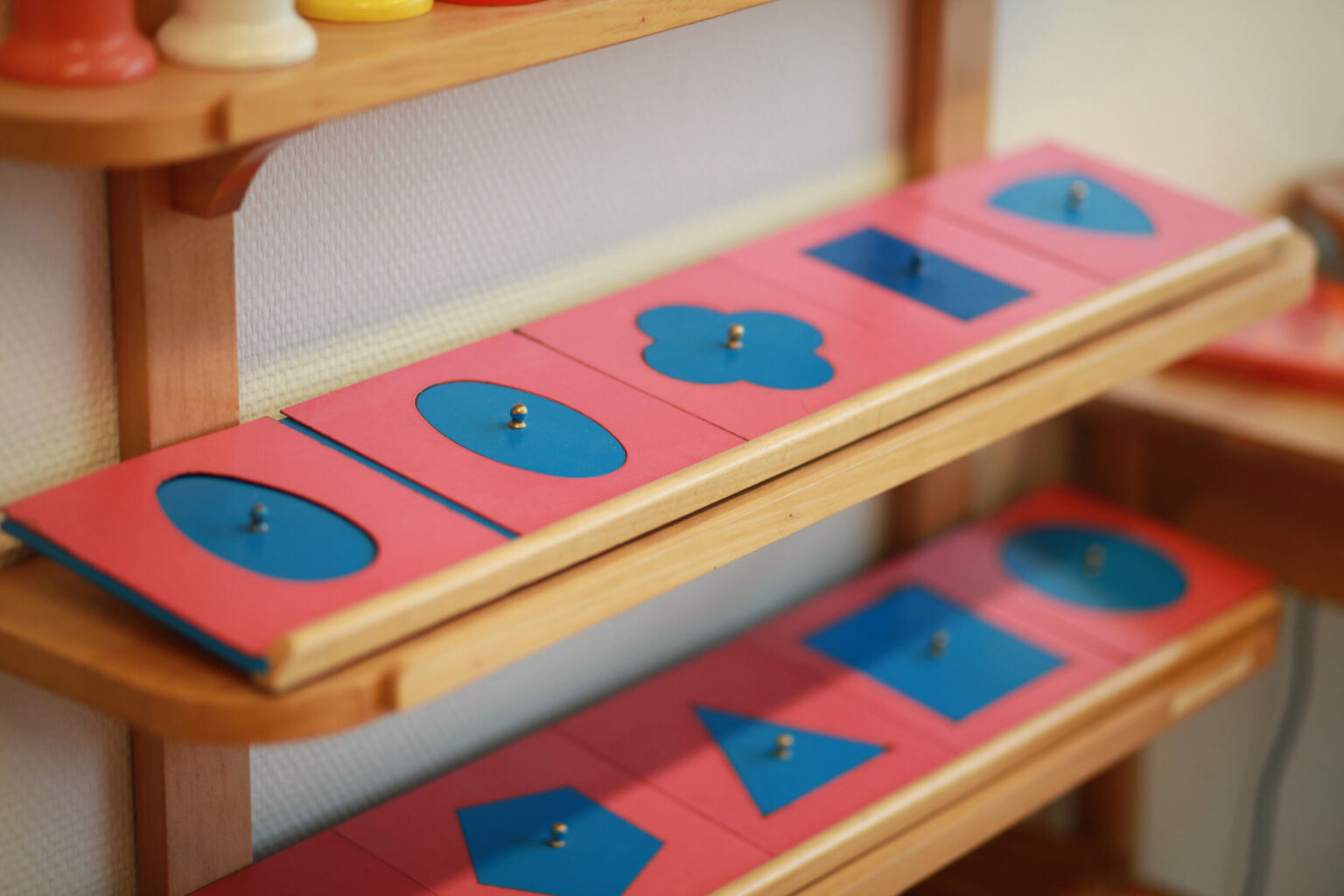
Children trace geometric shapes to strengthen pencil control, hand muscles, precision, and confidence before handwriting.
From Speaking to Literacy
Montessori language education follows children's natural developmental sequence. Before children are expected to read or write, they first build strong listening skills, expand their vocabulary, and develop confidence in spoken language through meaningful conversations and everyday experiences.
As children become aware of the individual sounds within words, they are introduced to phonics through hands-on Montessori materials. Writing often comes before reading, as children use the Moveable Alphabet to build words and express ideas before their pencil control is fully developed.
Reading grows naturally as children begin blending sounds, recognizing familiar words, and understanding that written language carries meaning. Because each stage builds upon the previous one, children develop literacy with confidence rather than through memorization or pressure.
This carefully prepared progression allows children to experience success at every stage while developing a genuine love of language, books, communication, and learning.
Preparing for the Future
Montessori language education is about much more than learning letters and reading books. It helps children become confident communicators who can express ideas clearly, listen thoughtfully, ask meaningful questions, and enjoy using language in everyday life.
As children build strong foundations in vocabulary, phonemic awareness, phonics, reading, and writing, they also develop concentration, logical thinking, creativity, and confidence. These skills support success across every area of learning, from mathematics and science to social studies and the arts.
Because children progress at their own pace, they experience success without unnecessary pressure. This positive relationship with language encourages a lifelong love of reading, writing, storytelling, and learning.
Montessori recognizes that literacy is not simply an academic skill—it is a powerful tool for understanding the world, connecting with others, and sharing ideas with confidence throughout life.
At Together We Grow Montessori School
At Together We Grow Montessori School, language development is an integral part of every child's Montessori experience. Throughout the day, children participate in meaningful conversations, storytelling, songs, practical activities, and carefully presented Montessori language lessons that support both spoken and written communication.
Our prepared classroom includes authentic Montessori language materials that help children progress naturally from listening and speaking to phonemic awareness, reading, and writing. Each lesson is introduced individually, allowing children to learn at their own pace while building confidence through hands-on exploration and repetition.
Montessori educators carefully observe each child's readiness and provide gentle guidance that encourages curiosity, independence, and a love of language. Rather than memorizing information, children actively construct understanding through meaningful experiences.
By creating a language-rich environment where every child feels heard, respected, and encouraged to express their ideas, Together We Grow Montessori School helps children build the communication skills that will support them throughout school and beyond.
Frequently Asked Questions
Montessori teaches language through meaningful conversations, rich vocabulary, phonics, storytelling, hands-on materials, reading, and writing experiences that follow each child's natural development.
Montessori language materials include Sandpaper Letters, the Moveable Alphabet, Object Boxes, Metal Insets, Classified Cards, and phonetic reading materials that support literacy through hands-on learning.
Children often express ideas using the Moveable Alphabet before their hand muscles are fully developed for pencil writing. This allows them to build confidence in language while writing skills continue to develop.
Yes. Montessori emphasizes phonics by helping children hear, identify, and blend letter sounds before introducing more advanced reading skills.
Children learn through authentic Montessori language materials, rich daily conversations, storytelling, songs, phonics activities, and individualized lessons that build confidence in communication, reading, and writing.
Language comes alive through conversation, exploration, and meaningful experiences. Visit Together We Grow Montessori School to see how our authentic Montessori environment helps children become confident speakers, readers, writers, and lifelong learners.
Book a School Tour